

About Modern Israel
Featured Analyses in English, Spanish and Hebrew:
-
Ken Stein, “Telling and Remembering Israel’s Story: Where you choose to begin and what you leave out betrays knowledge and bias.” March 2022
-
Como se hizo el Israel modern: Importa donde eliges comenzara contar o recorder la historia. Le da forma a la historia y a la politica que desea o no transmitir, March 2022
-
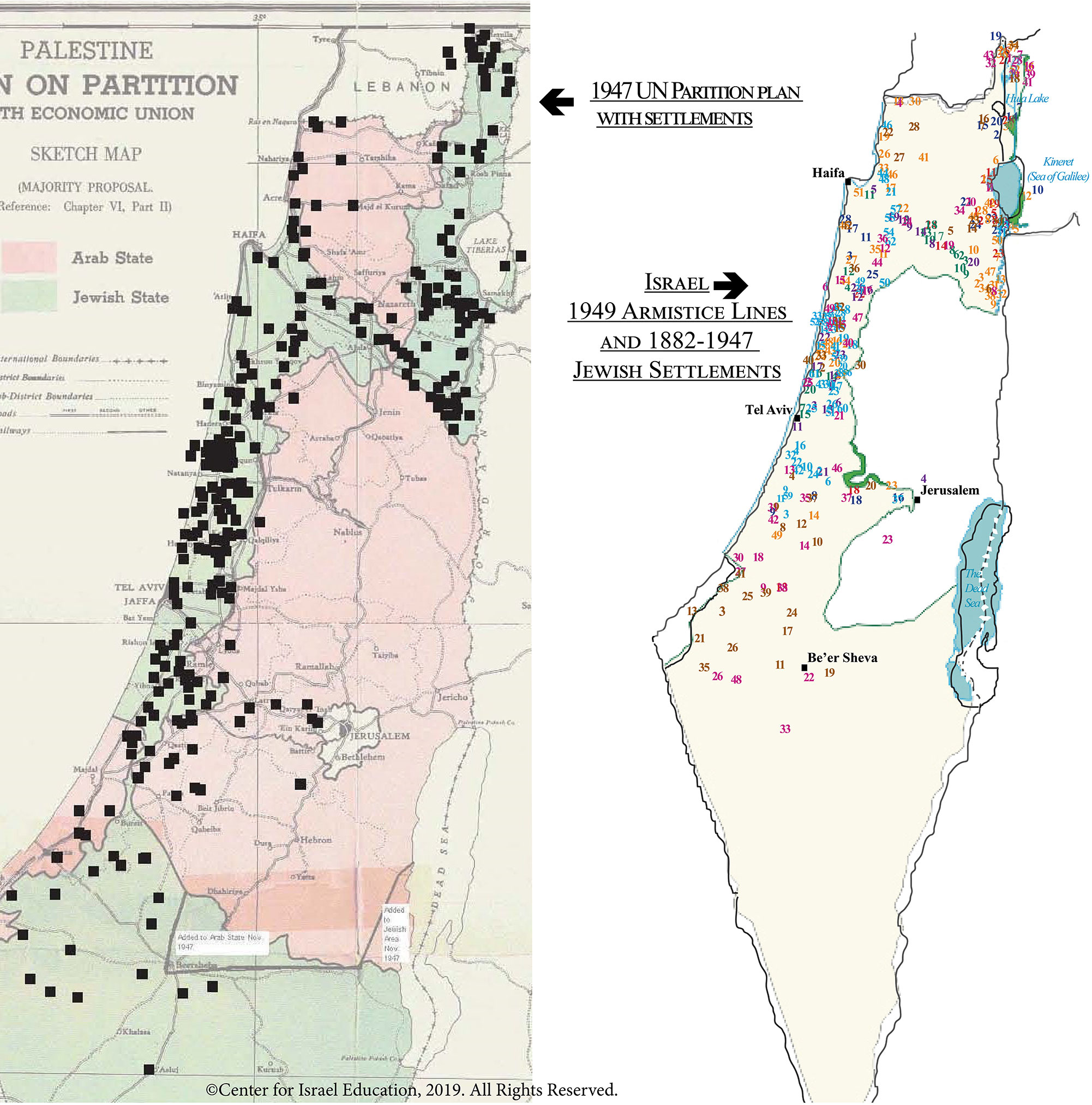
Forming a Nucleus for the Jewish State: 1882-1947
-
1882-1948 – גיבוש הגרעין למדינה היהודית
-
El proceso de formación del núcleo que constituyó la creación del estado de Israel
-
1947-1949 period: critical turning points in Zionist/Israeli//Palestinian History: sources and context (Espanol)
-
1949 Musa Alami, “The Lesson of Palestine,” Middle East Journal, October 1949
-
1945 -1949 Reasoned Views for the dysfunctional state of the Palestinian Arab’s political state of affairs
-
1939 Gershon Agronsky, "Palestine Arab Economy Undermined by Disturbances"
-
Itamar Rabinovich, “Testing the “Israel Lobby” Thesis, (reprinted from the American Interest with permission of the author), 2008
-
Artículos y blogs de Ken Stein
-
Transcripts, Interviews and Conference Proceedings on Arab-Israeli Negotiations of the 1970s
-
Hamilton Jordan, Memorandum to President Jimmy Carter, “Foreign Policy and Domestic Politics: The Role of the American Jewish Community in the Middle East,” June 1977
-
Origins of Israeli Democracy: Jewish Political Culture and Pre-State Practice, March 2021
-
Orígenes de la Democracia Israelí: La Cultura Política Judía y la Práctica Pre-Estado. March 2021
Program & Events
HAMAS-ISRAEL WAR WEBINAR SERIES
Every Wednesday at Noon, EDT
-
March 21, 2024 - ISMI-CIE Hamas-Israel War Update for teens and parents, Virtual event
-
November 12, 2023 - ISMI-CIE Israel Teen Leadership Institute, Atlanta, GA
-
February 12, 2023 - ISMI-CIE Israel Teen Leadership Institute, Atlanta, GA
-
February 4 & 5, 2023 - ISMI-CIE Israel@75: Zionism & Us, An Atlanta community event, Atlanta, GA
-
December 4, 2022 - Ken Stein, "Choosing a college, and choosing courses when I get there," Congregation Or Hadash, Atlanta, GA
-
November 29, 2022 - Ken Stein, "Continuity and Change in the US-Israel Relationship," Webinar, Congregation Beth Israel, Colleyville, TX
-
November 29, 2022 - Ken Stein with Rafi Danziger and Aaron Miller, "U.S- Israel Relations: 75 Years and on," Webinar, Atlanta, GA
-
November 11-12, 2022 - Ken Stein, "Origins and Development of Jewish Political Culture," and "Why the June 1967 War changed Middle Eastern, Israeli, and Jewish History," PHILOS, Pathfinders conference, Hendersonville, NC
-
November 4, 2022 - Ken Stein, "Where we begin telling Israeli history betrays our knowledge and prejudices," Jewish National Fund Annual Conference, Boston, MA
-
October 5, 2022 - Ken Stein "The Meaning of Israel for American Jewish Identity." Congregation Or Hadash, Atlanta, GA
-
July 24 - July 26, 2022 - CIE and ISMI Staff "Annual Teacher Israel Enrichment Workshop," Atlanta, GA
-
June 1, 2022 - Ken Stein, "Teaching the Modern Middle East," Decatur Public Schools, Decatur (Atlanta), GA
-
May 17, 2022 - Ken Stein, "U.S Higher Education on modern Israel Education," Institute for National Security Studies, Ramat Aviv, Israel
-
May 6, 2022 - Ken Stein, "The Arab-Israeli Conflict: Past, Present and Future (English and Spanish, 65 minutes) linked to https://israeled.org/the-arab-israeli-conflict-past-present-and-future-english-and-spanish-65-minutes/
-
May 6, 2022 - Ken Stein, "The History of Modern Israel," (English and Spanish, 60 minutes) https://israeled.org/the-state-of-israel-english-and-spanish-1-hour/
-
March 30, 2022 - Ken Stein, "Israel Education on Campus," Plevan Memorial Lecture, University of Arizona, Tucson, Arizona
-
November 6, 2021 - Ken Stein, "Domestic and Foreign Policy Issues on Israel's Agenda," Temple Emanu-El, Closter, New Jersey
-
October 5, October 26, November 16 & November 30 - Hillel/ISMI/CIE Modern Israel Intensive Series
-
September 19 &26 - CIE/ISMI Teen Israel Leadership Institute
-
June 13-17, 2021 - 20th CIE/ISMI Enrichment Workshop on Modern Israel
-
May 28, 2021, "The Palestinian-Israeli Clashes, May 2021," Webinar (53:34), https://www.youtube.
com/watch?v=vvjs48N96vw -
April 6, 2021 - Ken Stein, "American Foreign Policy to the Middle East and to the Palestinian issue: Johnson to Biden (1967-present) ASMEA, Remote (59:00) https://www.asmeascholars.org/
webinarstein -
March 7, 2021 - Ken Stein, "Why the Upcoming Palestinian and Israeli elections will not catalyze Palestinian-Israeli Talks," Sante Fe, New Mexico, Remote
-
January 12, 2021 - Ken Stein, "Options and Realities for Biden's Foreign Policy in the Middle East," The Temple, Atlanta, GA https://israeled.org/options-and-realities-for-bidens-foreign-policy-in-the-middle-east/ and https://youtube.com/watch?v=c4jMHIwvOLI Remote
-
October 23, 2020 - Ken Stein, " Arab-Israeli Negotiations: How does the UAE-Israel Agreement differ with Israeli-Egyptian- Israeli negotiations of the 1970s," Emory Alumni Weekend, Atlanta, GA Remote
About the Institute
- Founded in 1998, we are the OLDEST permanent Israel academic center in the United States.
-
ISMI has supported 16 Israel Visiting Scholars who have taught 760 students in 43 courses.
-
ISMI offers enriching internships to a select few Emory students every semester
- ISMI conducts Israel education workshops for teachers across the country
- ISMI cosponsors Teen Israel Leadership Institutes
- ISMI @ 20 Celebration—our history since 1998
Publications:
Polls and Surveys:
- Israel Democracy Institute, Israel Voice Index, Tamar Herman and Or Anabi, ““On the Eve of the Jewish New Year: How Optimistic Are Israelis and What Are Their Opinions on Iran and the Two-State Solution?” September 22, 2022, https://en.idi.org.il/articles/46000
- Israel Democracy Institute, Israeli Voice Index, Tamar Herman and Or Anabi, “Majority Think Low Chances Next Election will End Gridlock,” July 5, 2022, https://en.idi.org.il/articles/39274
- Palestine Center for Policy and Survey Research, Public Opinion Poll No. 84, June 28, 2022, https://pcpsr.org/en/node/910
- Israel Democracy Institute, Israeli Voice Index, Tamar Herman and Or Anabi, “Bennett-Lapid Government – One Year,” June 7, 2022, https://en.idi.org.il/articles/39003